

AI data extraction tools are transforming how businesses gather and process information. These solutions utilize advanced technologies to automate the extraction of valuable data from various sources, improving efficiency and accuracy. Understanding the different types of AI data extraction technologies is crucial for choosing the best tool. Features such as optical character recognition, natural language processing, and machine learning models play significant roles in enhancing data extraction processes.
Best AI tools for data extraction
Bright Data
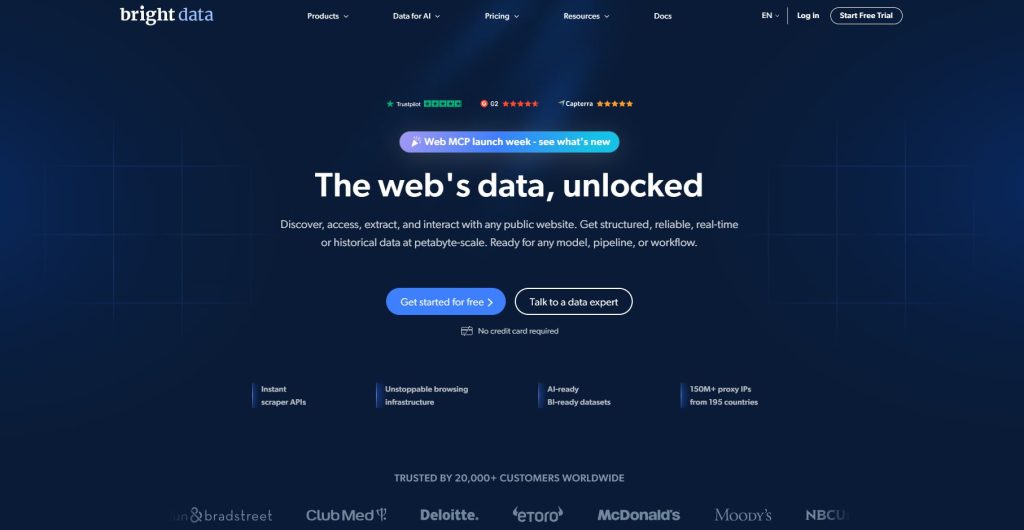
Bright Data (formerly known as Luminati) is one of the most complete and powerful platforms for large-scale web data collection. It is considered an enterprise-grade solution, offering access to the world’s largest proxy network and a full suite of tools for extracting data from almost any website.
The platform is designed for companies that need reliable, compliant, and high-volume data. Bright Data provides everything from no-code scraping tools for non-technical users to advanced developer solutions like a web scraper IDE and custom APIs. One of its standout features is the Web Unlocker, which helps bypass common obstacles such as CAPTCHAs, IP blocks, and dynamic content.
Bright Data is widely used for business-critical tasks such as price monitoring, brand protection, competitive analysis, and global market research. It’s especially valuable for organizations that need data from many countries and sources at the same time, while staying within legal and ethical guidelines.
Diffbot
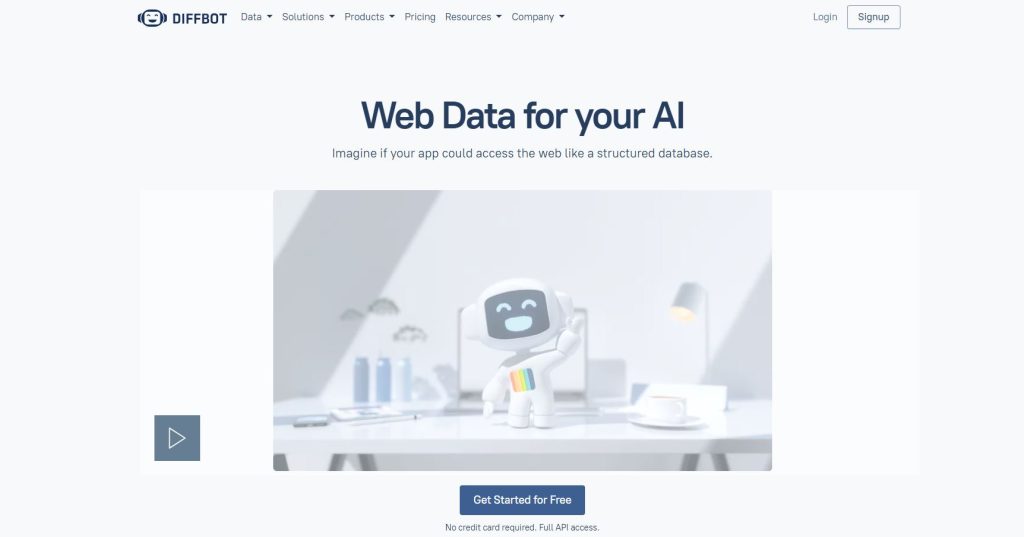
Diffbot is an advanced web data extraction platform mainly designed for developers and enterprises. It uses artificial intelligence, computer vision, and natural language processing to analyze any webpage and automatically transform its content into structured data, without the need for manual scraping rules.
One of its key features is the massive Knowledge Graph, a database built from billions of web pages that includes structured information about people, companies, products, and articles. This graph can be queried directly through APIs, making it easy to access high-quality data.
Diffbot is fully API-driven and offers tools for automatic URL extraction, full-site crawling, and text and image analysis. It is especially useful for media monitoring, competitive intelligence, building large datasets, and research projects at scale.
Captain Data
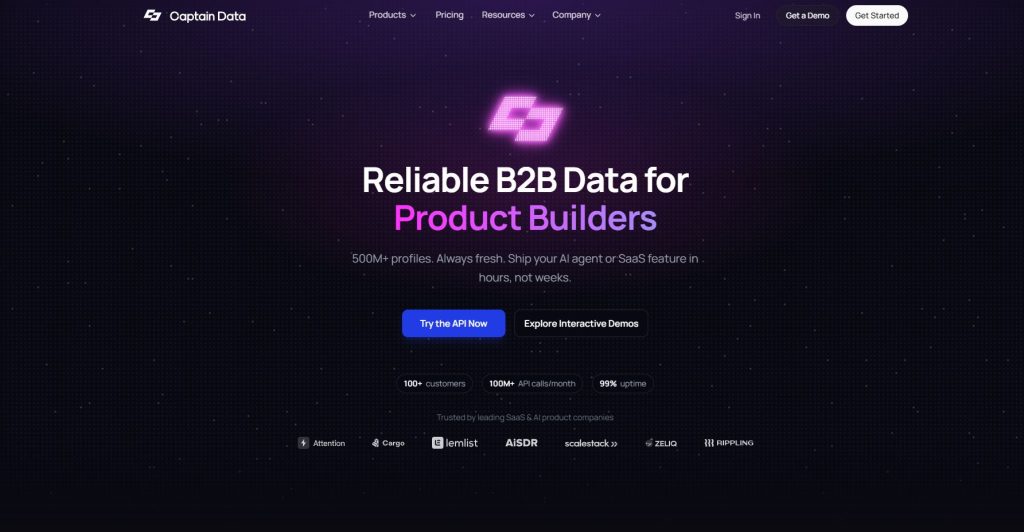
Captain Data is a no-code automation platform designed to help teams automate complex web data workflows without any programming. It works like a “Swiss Army knife” for data operations, allowing users to connect multiple steps into a single automated process, such as scraping data from LinkedIn, enriching it with company information, and sending it directly to a CRM.
The platform is especially popular among growth teams, sales operations, and analysts who need to handle large volumes of data efficiently. Instead of building custom scripts, users can rely on pre-built automations or create their own workflows using a visual builder.
Captain Data also includes powerful data enrichment features and integrates easily with popular CRMs and SaaS tools. Typical use cases include lead generation, recruitment, e-commerce data collection, and market research, making it a practical solution for teams that want to scale data-driven processes quickly and without technical complexity.
Octoparse
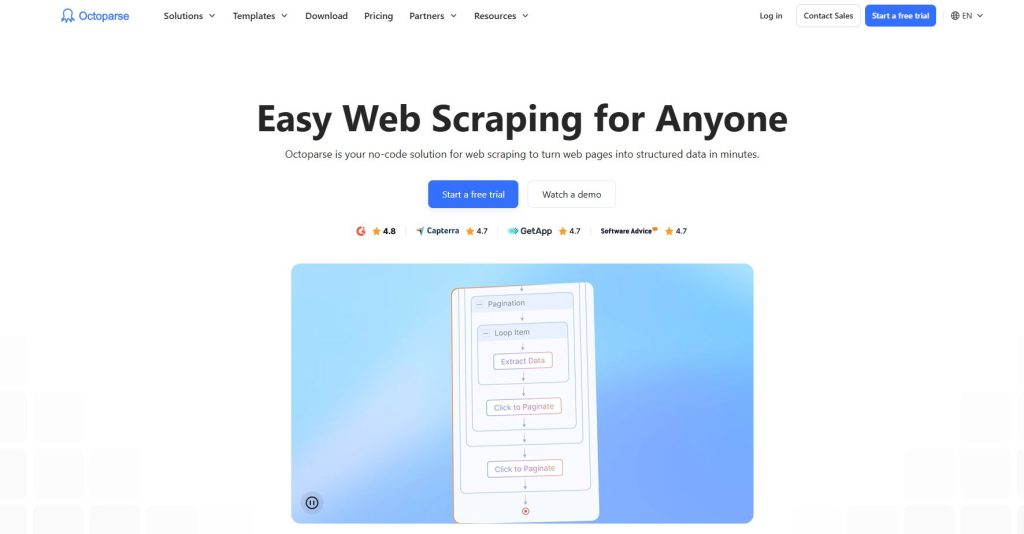
Octoparse is a powerful no-code web scraping tool built for users who need to extract large amounts of data without writing any code. It offers both a desktop application and a cloud-based service, making it flexible for different types of projects. The platform includes a visual workflow builder and a wide range of ready-made templates that simplify even complex scraping tasks.
Octoparse is especially useful for analysts, researchers, and e-commerce professionals who work with dynamic or protected websites. Its point-and-click interface allows users to select elements directly from a page, while the auto-detection feature helps identify data fields automatically. It also supports cloud scheduling, login handling, and JavaScript-heavy pages.
Common use cases include scraping product catalogs, customer reviews, real estate listings, and other large datasets where manual data collection would be too slow or inefficient.
Understanding AI Data Extraction Technologies
As organizations navigate vast amounts of data, understanding the core technologies behind AI data extraction is crucial for effective implementation and use. These technologies enable businesses to process, analyze, and leverage data efficiently.
How AI Transforms Data Extraction
Artificial intelligence integrates various techniques that streamline the data extraction process. By automating repetitive tasks and improving accuracy, AI allows for quicker and more reliable data handling. Businesses can reduce their reliance on manual input, leading to improved operational efficiency.
AI technologies assess and interpret data from multiple sources. This encompasses structured formats, like databases, and unstructured forms, such as emails or scanned documents. By understanding context and semantics, AI tools can extract pertinent information, significantly enhancing decision-making processes.
Differences Between AI and OCR in Data Extraction
Optical Character Recognition (OCR) plays a vital role in data extraction but differs significantly from AI methodologies. OCR focuses primarily on converting text within images or scanned documents into machine-readable formats. In contrast, AI encompasses advanced algorithms that not only recognize text but also comprehend its meaning and relevance within the document’s context.
AI techniques enhance the capabilities of traditional OCR by applying machine learning models to improve extraction accuracy over time. This automated learning allows for the identification of patterns and relationships in the data, which is something standard OCR cannot achieve alone.
Key Components of AI-Powered Data Extraction
The effectiveness of AI data extraction hinges on several key components that work collaboratively to achieve high levels of accuracy and efficiency.
Optical Character Recognition (OCR)
OCR serves as the foundation for converting physical text into digital formats. It scans documents and recognizes characters, producing editable content. The advancement in OCR technology has facilitated the handling of various fonts and languages, making it a staple in data extraction processes.
Modern OCR can perform with high accuracy despite challenging conditions, such as varying fonts and layouts, thereby streamlining initial data extraction phases.
Natural Language Processing (NLP)
NLP allows machines to interpret and understand human language. This technology plays a crucial role in analyzing text data extracted via OCR. NLP enables AI to discern intent, sentiment, and context, facilitating more intelligent data processing.
By utilizing NLP, AI systems can categorize and sort extracted text, enhancing the relevance of information provided to end-users or decision-making systems.
Machine Learning Models
Machine learning contributes to data extraction by training algorithms to identify patterns and improve over time. These models learn from vast datasets, allowing them to refine their accuracy and adapt to new types of data. The incorporation of machine learning results in powerful data extraction capabilities that can scale with business needs.
Predictive Analytics
Predictive analytics employs statistical algorithms and machine learning techniques to forecast outcomes based on historical data. In the context of data extraction, this technology can optimize decision-making by providing insights into trends and user behavior.
By leveraging predictive analytics, organizations can proactively adjust their data strategies and enhance their operational efficiency, ensuring that data extraction aligns with future needs.
Choosing the Best AI Data Extraction Tool
Selecting the right AI data extraction tool is crucial for organizations looking to improve their data management processes. The following criteria and platforms can help guide the decision-making process.
Criteria to Evaluate AI Data Extraction Tools
When assessing which AI data extraction tool to choose, several factors should be considered:
- Accuracy: The ability to correctly identify and extract relevant data is paramount. Tools should minimize errors and provide high-quality outputs.
- Scalability: Consider whether the tool can handle increasing volumes of data and adapt to changing demands within the organization.
- Integration: Compatibility with existing systems and ease of integration are essential for seamless operation.
- User Experience: Intuitive interfaces and user-friendly design can significantly enhance productivity and reduce training time.
- Cost-effectiveness: Evaluate pricing models against features and performance to find a tool that offers good value.
The Best AI Models for Data Extraction
Different models cater to various extraction needs. Understanding the available options helps in selecting the most effective tool for specific requirements.
Customizable AI Models
Customizable AI models offer flexibility, allowing organizations to tailor the tool based on their unique data extraction needs.
Pre-trained Models for Common Use Cases
Pre-trained models are designed for specific tasks, such as invoice processing or customer data extraction. They provide quick implementations, reducing the time needed to deploy a solution.
Popular AI Data Extraction Platforms in 2026
Several platforms have emerged as leaders in the AI data extraction domain, providing robust solutions tailored to various industries.
Platforms for Document Processing
Document processing platforms specialize in extracting data from scanned or digital documents. These tools utilize advanced technologies for tasks such as invoice reconciliation, contract analysis, and more.
Platforms for Web Data Extraction
Web data extraction tools focus on gathering data from websites. They are commonly used for market research, competitive analysis, and real-time data monitoring. Their features often include no-code interfaces and browser plugins to simplify use.
No-Code and Low-Code Solutions
No-code and low-code platforms are gaining popularity by allowing users with minimal technical knowledge to create custom data extraction workflows. They provide drag-and-drop interfaces and are ideal for organizations looking to empower non-technical staff.
Features That Make the Best AI Data Extraction Tools
AI data extraction tools offer various features that optimize performance and enhance user experience. These capabilities are essential for businesses seeking efficient data management and processing.
Automation and Workflow Integration
One of the most significant advantages of AI data extraction tools is their automation capabilities. By automating repetitive tasks, these tools minimize the need for manual intervention, which not only saves time but also reduces the likelihood of errors. Integration with existing workflows enables seamless transitions between data extraction and subsequent processing stages.
Handling Structured and Unstructured Data
The best AI data extraction tools are designed to handle both structured and unstructured data effectively. Structured data, such as spreadsheets, can be processed easily, while unstructured data, including text documents and images, requires more sophisticated algorithms. Advanced AI techniques allow tools to extract useful information from diverse data formats, presenting it in a consumable format for analysis.
Real-Time Data Extraction and Processing
Speed is essential in today’s fast-paced business environment. Tools with real-time data extraction capabilities can process information almost instantaneously. This feature allows organizations to make timely decisions based on the latest data, improving responsiveness to market changes or internal demands.
Scalability and Multi-Source Data Integration
The ability to scale operations is crucial for businesses looking to grow. Top-tier AI data extraction tools offer robust scalability, providing the flexibility to handle increasing volumes of data without compromising performance. Furthermore, these solutions can integrate data from multiple sources, combining information into a cohesive dataset that enhances analysis capabilities.
Data Classification and Field Extraction Capabilities
Effective data classification is vital for organizing extracted information. Many AI-powered tools utilize machine learning algorithms to categorize data accurately. This feature ensures that relevant fields are extracted and labeled correctly, making it easier to locate and utilize specific data points later.
Accuracy and Error Reduction Mechanisms
Minimizing errors during data extraction is paramount. The most proficient tools implement various mechanisms to ensure high accuracy rates. These mechanisms may include validation processes, feedback loops for continuous improvement, and advanced algorithms that learn from previous data extraction attempts to refine results over time.
Pricing Models and Availability of Free Trials
When selecting AI data extraction tools, understanding pricing models is essential. Many solutions offer flexible pricing structures, including subscription-based models, pay-per-use options, or tiered pricing based on usage volume. Additionally, the availability of free trials allows businesses to test tools before committing financially, ensuring they find the best fit for their needs.
Use Cases and Industry Applications
AI data extraction tools are finding extensive applications across various industries, enhancing workflow efficiency and data accuracy. Here are several prominent use cases illustrating their transformative impact.
Finance: Extracting Data from Invoices and Financial Documents
The finance industry benefits significantly from AI-driven data extraction, particularly in managing financial documents that require meticulous attention.
Automating Accounts Payable and Receivable
Automation in accounts payable and receivable enables organizations to streamline their financial processes. With AI tools, companies can efficiently extract data from invoices, reducing manual entry time and error rates. This leads to faster processing cycles and improved cash flow management.
Compliance and Regulatory Data Extraction
Staying compliant with regulations is crucial for financial institutions. AI-powered extraction tools facilitate the automatic retrieval of necessary compliance data from various documents. This not only ensures adherence to regulatory requirements but also helps mitigate risks associated with data inaccuracies.
Healthcare: Patient Data Extraction and Document Digitization
In healthcare, AI data extraction plays a pivotal role in managing vast amounts of patient information and clinical documentation.
Managing Medical Records and Reports
Efficient management of medical records is essential for healthcare providers. AI tools assist in digitizing and extracting relevant information from patient files, making it readily accessible for healthcare professionals. This capability enhances patient care and streamlines administrative tasks.
Enhancing Patient Data Accuracy
With the implementation of AI, the accuracy of patient data is significantly improved. Automated extraction minimizes human error, ensuring that healthcare providers have access to reliable information for diagnosis and treatment. Accurate records also facilitate better patient outcomes.
Logistics and Supply Chain Document Processing
Logistics companies leverage AI extraction tools to enhance operations and optimize supply chain management.
Shipment and Delivery Documentation
AI solutions automate the extraction of information from shipment and delivery documents. By digitizing this process, logistics firms can track shipments more effectively and reduce discrepancies in documentation.
Inventory Data Extraction and Management
Managing inventory efficiently is essential for minimizing costs and meeting customer demands. AI tools extract data from inventory records, allowing businesses to monitor stock levels and demand patterns accurately. This capability aids in optimizing procurement processes.
Legal Sector: Contract Analysis and Risk Management
AI data extraction is increasingly vital in the legal sector for managing contracts and compliance information.
Extracting Key Terms and Dates
Law firms utilize AI-driven tools to extract critical terms, dates, and clauses from contracts. This process accelerates contract review and helps legal professionals identify potential risks associated with contract obligations.
Managing Compliance Information
The management of compliance-related documents is crucial for legal firms. With AI, organizations can automatically extract and categorize compliance data, ensuring that all legal obligations are met without extensive manual oversight.
Marketing and Market Research: Web Scraping and Data Collection
In the marketing landscape, AI tools enable efficient data collection, providing valuable insights for strategic decision-making.
Gathering Competitive Intelligence
AI-powered web scraping tools gather data from various online sources, allowing companies to analyze competitors’ strategies and market positioning. This intelligence helps marketers develop informed strategies and drive competitive advantage.
Real-Time Monitoring of Market Trends
AI facilitates the real-time extraction of market data, enabling businesses to stay updated on evolving trends. Through continuous monitoring, companies can adapt their marketing strategies effectively and respond to market changes proactively.
Integrating AI Data Extraction into Business Operations
Successfully embedding AI data extraction into business practices can significantly enhance operational efficiency and data accuracy. By leveraging these technologies, organizations can streamline processes and improve decision-making.
Reducing Manual Data Entry and Related Errors
Manual data entry is not only time-consuming but also prone to human error. Automating data extraction minimizes the need for manual input, which reduces the occurrence of mistakes that can arise from fatigue or oversight. By implementing AI solutions, companies can ensure a higher degree of accuracy in their data handling.
- Eliminates repetitive tasks, allowing employees to focus on strategic initiatives.
- Enhances data consistency and reliability across various departments.
- Reduces costs associated with error correction and data management.
Improving Efficiency Through Automation
Automation stands as a cornerstone in modern business environments. By replacing manual data collection processes with automated systems, organizations can significantly boost their productivity. Automated AI tools can extract relevant information from documents or databases swiftly, allowing for rapid data processing.
- Facilitates faster decision-making by providing real-time data access.
- Streamlines workflows, significantly reducing turnaround time for data-related tasks.
- Enables scalability, accommodating growing data volumes without additional manpower.
Data Quality Management and Validation Tools
Ensuring data integrity is paramount for any organization relying on data for critical decision-making. AI data extraction tools typically incorporate data validation mechanisms that help verify the accuracy and consistency of the extracted information.
- Employ machine learning models that adapt and learn from data patterns.
- Integrate validation processes that cross-check extracted data against predefined rules or datasets.
- Utilize feedback loops to enhance the overall quality and reliability of data extraction.
Combining Data Extraction with Data Integration Platforms
The ability to merge data from multiple sources is essential for comprehensive analysis. AI-powered data extraction tools can seamlessly integrate with data management platforms, facilitating a smoother flow of information within organizations. This integration enhances collaboration and data sharing among different teams.
- Creates a unified view of data, improving analytical capabilities.
- Allows businesses to leverage insights from disparate data sources.
- Streamlines workflows, enhancing overall organizational effectiveness.
Security and Compliance Considerations
As organizations increasingly handle sensitive data, the importance of security and compliance cannot be overstated. AI data extraction tools must comply with various regulations, ensuring that data handling practices meet legal standards.
- Incorporate robust security measures to protect sensitive information during extraction.
- Implement user access controls to minimize unauthorized data exposure.
- Maintain audit trails for compliance tracking and accountability.
Comparing Top AI Data Extraction Solutions
Evaluating AI data extraction solutions is crucial for businesses looking to streamline their data processes. This section examines various tools available in the market and their capabilities.
Versatile Tools for Document and Web Data Extraction
Several tools offer robust features for both document processing and web data extraction. These versatile solutions are designed to handle diverse data types, allowing businesses to manage everything from invoices to online content seamlessly. Popular tools include:
- V7 Go: Provides comprehensive automation for tasks involving both documents and web data, ensuring ease of use.
- Octoparse: Known for its no-code approach, making web data extraction accessible for non-programmers.
- Mindee: Integrates well with other systems, facilitating smooth data management across platforms.
Tools Focused on Web Scraping and API Integration
Web scraping has become an essential aspect of data extraction, especially for market analysis. Tools that focus on web scraping and API integration streamline the process, offering businesses the capability to gather real-time data efficiently. Notable solutions include:
- Import.io: Offers a powerful visual web scraping platform with seamless API integrations.
- Apify: Provides extensive automation features tailored for web scraping and data extraction tasks.
Solutions with Advanced OCR and Intelligent Document Processing
Advanced Optical Character Recognition (OCR) combined with intelligent document processing enhances the accuracy and speed of data extraction. This technology is vital for organizations managing large volumes of documents. Key players in this category are:
- Rossum: Implements sophisticated OCR technology, allowing for quick and accurate data retrieval from invoices and contracts.
- Hevo Data: Offers advanced data integration solutions that leverage OCR capabilities for optimal document processing.
Platforms Offering Custom AI Model Training
Customizability is a significant advantage when selecting an AI data extraction tool. Platforms that offer custom AI model training enable businesses to develop solutions catered to their specific needs. This flexibility is crucial for organizations experiencing varied data demands. Key solutions include:
- Nanonets: Allows businesses to create tailored models for unique data extraction challenges.
- Diffbot: Provides a way to customize AI models for specific use cases, enhancing data accuracy and relevance.
Pricing and Feature Comparison of Leading Tools
Understanding the pricing structures and features of various AI data extraction tools allows companies to align their choices with budget and operational needs. Key factors to consider include:
- Cost-effectiveness of subscription plans versus one-time purchases.
- Availability of free trials or demo versions to assess functionality.
- Support and training resources offered by the vendor.
Different tools also offer distinct feature sets that can significantly impact return on investment (ROI). Evaluating these factors carefully ensures that the selected solution meets both present and future data extraction needs.
Frequently Asked Questions About AI Data Extraction
This section provides insights into common inquiries regarding AI data extraction, focusing on functionalities, accuracy, and integration capabilities.
What Types of Documents Can AI Extract Data From?
AI data extraction tools are designed to handle a diverse range of documents. This includes:
- Invoices and financial statements
- Contracts and legal documents
- Healthcare records and patient data
- Shipping documents and logistics papers
- Web pages and online content
The ability to process both structured and unstructured documents is crucial, as it allows organizations to gather vital information from various formats efficiently.
How Accurate Are AI Data Extraction Tools?
The accuracy of AI data extraction tools typically depends on several factors. These include the sophistication of the algorithms used, the quality of input data, and the specific use case. AI tools are known for:
- Reducing human error in data entry tasks
- Improving overall data integrity through advanced learning techniques
- Providing validation and correction mechanisms to enhance output
However, the need for continuous refinement and training is evident, as accuracy can vary based on document type and the complexity of data to be extracted.
Can AI Handle Unstructured Data Effectively?
Yes, AI is particularly adept at managing unstructured data, which typically includes any information that does not have a predefined data model. This encompasses text-heavy documents, images, and multimedia files. Cutting-edge techniques in:
- Natural Language Processing (NLP)
- Machine learning
allow AI tools to analyze context and extract relevant information effectively, transforming unstructured data into usable insights.
What Is the Difference Between OCR and AI Extraction?
While Optical Character Recognition (OCR) focuses primarily on converting printed text into machine-readable text, AI data extraction goes further by utilizing advanced algorithms to understand and interpret the context within the data. Key distinctions include:
- OCR simply extracts text, whereas AI extraction comprehends context and relationships.
- AI tools can analyze data patterns and make intelligent decisions based on content.
- OCR may struggle with complex layouts, while AI algorithms are designed to handle diverse document structures.
This comprehensive capability makes AI-powered solutions more suited for intricate data extraction tasks.
Are There Tools That Require No Coding Skills?
Indeed, many modern AI data extraction tools are designed with user-friendliness in mind. These platforms often provide:
- No-code and low-code interfaces for easy setup and management
- Drag-and-drop functionalities to streamline data processing
- Pre-built templates for common extraction scenarios
This accessibility enables even non-technical users to leverage AI capabilities for efficient data extraction.
How Do AI Tools Integrate With Existing Systems?
AI data extraction tools are increasingly designed to integrate seamlessly with existing business systems, enhancing operational workflows. Integration features often include:
- API support for connecting with other enterprise applications
- Compatibility with various data formats and sources
- Automation capabilities to streamline the flow of data across systems
Such integrations facilitate real-time data processing and improve overall organizational efficiency.
What Are the Common Challenges in AI Data Extraction?
Despite their advantages, AI data extraction tools face several challenges, such as:
- Ensuring high levels of accuracy, especially with complex documents
- Handling variability in document formats and layouts
- Maintaining data privacy and compliance with regulations
- Continually adapting to new types of data and extraction requirements
Addressing these challenges is crucial for optimizing the benefits of AI in data extraction processes.

